China Top 10 Office Space Design Companies 2026
China’s office space design sector is entering 2026 with sharper expectations. Companies now need more than attractive interiors. They need workplaces that support concentration, collaboration, wellbeing, and operational efficiency.
This guide, “China Top 10 Office Space Design Companies 2026,” examines firms through practical evidence. We consider completed projects, design expertise, material choices, sustainability measures, and client experience. We also examine how each company handles lighting, acoustics, circulation, and flexible work areas. A quiet meeting room, adjustable task lighting, and a well-placed coffee point can influence daily productivity more than expensive decoration.
Workplace psychologist Craig Knight has said, “The more control people have over their environment, the happier and more motivated you are.” This principle remains valuable for modern office space design. Employees may need private corners, movable furniture, or informal spaces with natural light. A rigid layout can appear efficient, yet feel uncomfortable after several hours.
The companies selected here show different strengths. Some focus on corporate headquarters. Others specialize in technology offices, serviced workplaces, or regional commercial projects. Their approaches are not equally suitable for every organization. That matters.
A visually impressive office can still suffer from echo, glare, poor ventilation, or confusing circulation. We should admit that design awards cannot measure every daily experience. This ranking offers a researched reference, not an absolute verdict. Readers should compare each firm’s portfolio, professional qualifications, project process, and aftercare support before making a decision.
China’s Office Space Design Industry in 2026
China’s office space design industry is entering 2026 with a stronger focus on human needs.
The best design teams now study workplace behavior, not only floor plans.
They combine local research, international standards, and practical construction experience.
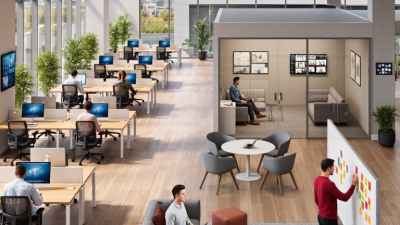
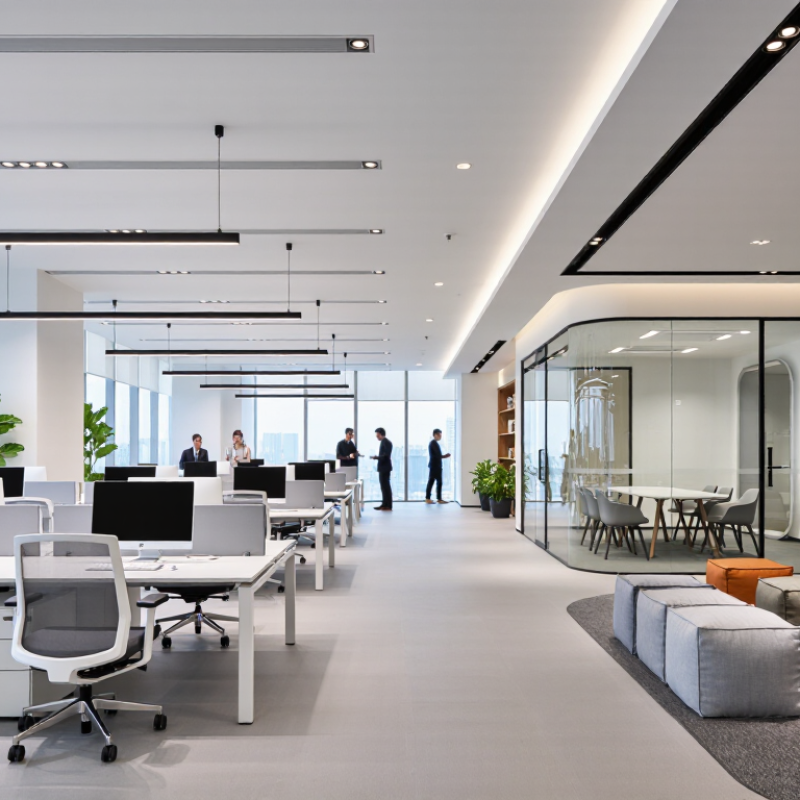
Their projects often include flexible desks, quiet rooms, shared studios, and wellness areas.
Small details matter.
In major Chinese cities, hybrid work is reshaping office planning.
Designers are reducing fixed seating and creating spaces that support different work rhythms.
Sensors can track occupancy, lighting, and indoor air quality.
However, technology must serve employees rather than impress visitors.
A reliable project also considers fire safety, accessibility, energy use, and long-term maintenance.
These factors help distinguish leading firms from visually attractive but impractical competitors.
Material selection is becoming more responsible in 2026.
Design teams increasingly request low-emission finishes, durable flooring, and reusable furniture systems.
They also measure daylight, acoustic comfort, and temperature across real working hours.
Still, the industry is not flawless.
Some proposals remain too focused on polished images.
A beautiful reception area cannot solve poor circulation or constant noise.
Experienced consultants should test layouts with employees before construction begins.
They should also admit when a concept needs revision.
The top ten office space design companies will likely be judged by measurable performance, user feedback, and their ability to adapt after handover.
Selection Criteria for the Top 10 Office Space Design Companies
Selecting the top 10 office space design companies in China requires more than attractive renders. The assessment should begin with verified project experience across technology, finance, manufacturing, and creative workplaces. Completed offices reveal how designers handle circulation, acoustics, lighting, and changing team sizes. Proof matters. Project photographs should be supported by client references, completion dates, and measurable results.
Professional expertise must be tested through the design process. Strong candidates explain workplace research, space planning, material choices, and construction coordination in clear language. They should understand local building codes, fire safety requirements, accessibility, and energy performance. A practical review may compare proposed layouts, cost schedules, and maintenance plans. Visiting a completed site can expose details that drawings conceal, such as glare on meeting-room screens or noise near shared desks.
Authority should come from qualified teams, consistent documentation, and transparent responsibilities. Reliable firms disclose who leads the project, how revisions are managed, and what happens after handover. Sustainability claims also need evidence, including material certifications, indoor-air strategies, and energy targets. No scorecard is perfect. A polished reception area can distract reviewers from weak employee facilities. That gap matters. Selection should therefore combine expert interviews, site observations, client feedback, and post-occupancy performance. Some evidence may remain incomplete, so reviewers should record uncertainty instead of forcing a confident ranking.
China Top 10 Office Space Design Companies 2026 - Selection Criteria for the Top 10 Office Space Design Companies
Comparative shortlist based on transparent office-design evaluation criteria. Company identities are intentionally anonymized; all scores use a 100-point assessment model.
| Rank |
Anonymous Practice |
Relevant Portfolio
30 pts |
Workplace Strategy
20 pts |
Sustainability
15 pts |
Delivery Capability
15 pts |
Technical Coordination
10 pts |
User-Centred Design
10 pts |
Total Score
100 pts |
Selection Level |
| 1 |
Practice A |
28 |
19 |
14 |
14 |
9 |
9 |
93 |
Outstanding |
| 2 |
Practice B |
27 |
18 |
14 |
14 |
9 |
9 |
91 |
Outstanding |
| 3 |
Practice C |
27 |
18 |
13 |
13 |
9 |
9 |
89 |
Outstanding |
| 4 |
Practice D |
26 |
18 |
13 |
13 |
9 |
9 |
88 |
Outstanding |
| 5 |
Practice E |
26 |
17 |
13 |
13 |
9 |
9 |
87 |
Strong |
| 6 |
Practice F |
25 |
17 |
13 |
13 |
9 |
9 |
86 |
Strong |
| 7 |
Practice G |
25 |
17 |
12 |
13 |
9 |
9 |
85 |
Strong |
| 8 |
Practice H |
25 |
16 |
12 |
13 |
9 |
9 |
84 |
Strong |
| 9 |
Practice I |
24 |
16 |
12 |
13 |
9 |
9 |
83 |
Strong |
| 10 |
Practice J |
24 |
16 |
12 |
12 |
9 |
9 |
82 |
Strong |
Selection criteria:
Relevant Portfolio measures completed office projects and sector relevance; Workplace Strategy assesses planning, flexibility, hybrid-work readiness, and change management; Sustainability covers energy efficiency, material responsibility, wellness, and recognized green-building practices; Delivery Capability considers budgeting, scheduling, procurement, and site delivery; Technical Coordination evaluates engineering integration, documentation, and compliance; User-Centred Design measures inclusivity, employee experience, accessibility, and post-occupancy feedback.
Profiles of China’s Top 10 Office Space Design Companies
China’s top ten office space design companies in 2026 reflect a broader shift from decoration toward measurable workplace performance. Their profiles show different strengths: workplace strategy, flexible planning, sustainable materials, smart technology, and regional cultural interpretation. Several practices design quiet rooms with acoustic panels, movable desks, and daylight near shared zones. Others create compact project studios for fast collaboration.
The 2024 UNEP Global Status Report for Buildings and Construction states that buildings and construction consume about 32% of global energy and produce around 34% of global emissions. This pressure shapes the leading profiles. They specify recycled finishes, lower-carbon materials, and lighting controls based on occupancy. Details matter. A well-placed window can reduce artificial lighting. A poorly planned corridor can waste valuable floor area.
A 2024 Asia-Pacific workplace survey found that employees increasingly value choice, privacy, and purposeful office attendance. The strongest Chinese practices respond with neighborhood layouts, reservable focus rooms, and hospitality-style meeting areas. Their experience is visible in circulation paths and furniture testing, not only in polished renderings. Yet some profiles still overuse open-plan seating and decorative greenery. That weakness deserves attention. A beautiful office can remain tiring, noisy, and difficult to maintain. Reliable designers therefore combine post-occupancy feedback with energy data, employee interviews, and realistic budget checks. The best profiles are not flawless. They are willing to revise the plan after people begin using it.
Comparison of Services, Expertise, and Project Capabilities
China Top 10 Office Space Design Companies 2026
Comparing China’s leading office design teams requires more than reviewing attractive renderings. Services should cover workplace strategy, test fits, interior architecture, engineering coordination, procurement, and post-occupancy support. A 2024 global occupier survey reported that many organizations expect office attendance to remain stable or increase. This raises demand for adaptable layouts, not merely impressive reception areas.
Expertise becomes visible in details.
Can the team convert a 2,000-square-meter floor into quiet rooms, shared project zones, and efficient circulation? Can it balance acoustic privacy with daylight? The 2024 Global Green Building Trends report indicated continued growth in demand for healthier and lower-carbon buildings. Therefore, serious comparisons should examine material traceability, energy modeling, indoor-air strategies, and measurable operational savings.
Project capability also needs evidence. Review completed projects by scale, sector, city, budget, and delivery method.
Ask who handled site coordination, approvals, and late-stage changes. A strong portfolio may still hide weak handover procedures.
I would score each company against schedule control, technical depth, local execution, and flexibility after construction. The scoring is imperfect. Client interviews can be biased, and photographs rarely show maintenance problems.
Yet these limitations are useful reminders: workplace quality should be judged after employees use the space, not when the opening images look polished.
Key Trends Shaping Office Space Design in China in 2026
China Top 10 Office Space Design Companies 2026
Key Trends Shaping Office Space Design in China in 2026
Hybrid work is reshaping Chinese offices, but attendance remains uneven. The 2024 Asia Pacific Office Occupier Survey reported that 76% of organizations expected higher office utilization. Designers now need flexible neighborhoods, not rows of fixed desks. A 12-person project room may become a training area by afternoon. Sliding partitions, movable acoustic screens, and plug-and-play power support this change. The numbers are useful. They are not a complete design brief.
Wellbeing is becoming measurable. The 2024 Global Workplace Survey found that only 29% of employees considered their workplace highly effective. In response, leading projects are adding daylight zones, quiet rooms, indoor planting, and shorter walking routes. Small details matter. A shaded window seat can support focused work better than decorative furniture. Yet some offices still overuse biophilic finishes without improving air quality or noise control. That deserves criticism.
Sustainability is also moving from certification language into daily operations. The 2024 World Green Building Trends report identified energy efficiency and carbon reduction as major investment priorities across commercial buildings. In China, this means adaptive lighting, lower-carbon materials, smart ventilation, and furniture designed for disassembly. Digital dashboards can track energy use, but poor sensor placement may produce misleading results. Designers should test real occupancy patterns for several weeks before finalizing layouts. Beautiful space is not enough. Performance must be verified.
China Office Space Design Outlook 2026
Key workplace design priorities shaping office environments in China in 2026
Flexible work settings, employee wellbeing, smart-building integration, low-carbon retrofits, and collaborative social areas are expected to remain the most influential design directions. The trend-strength scores are a comparative editorial synthesis of publicly reported workplace, sustainability, and office-market research; they are not company-specific survey results.